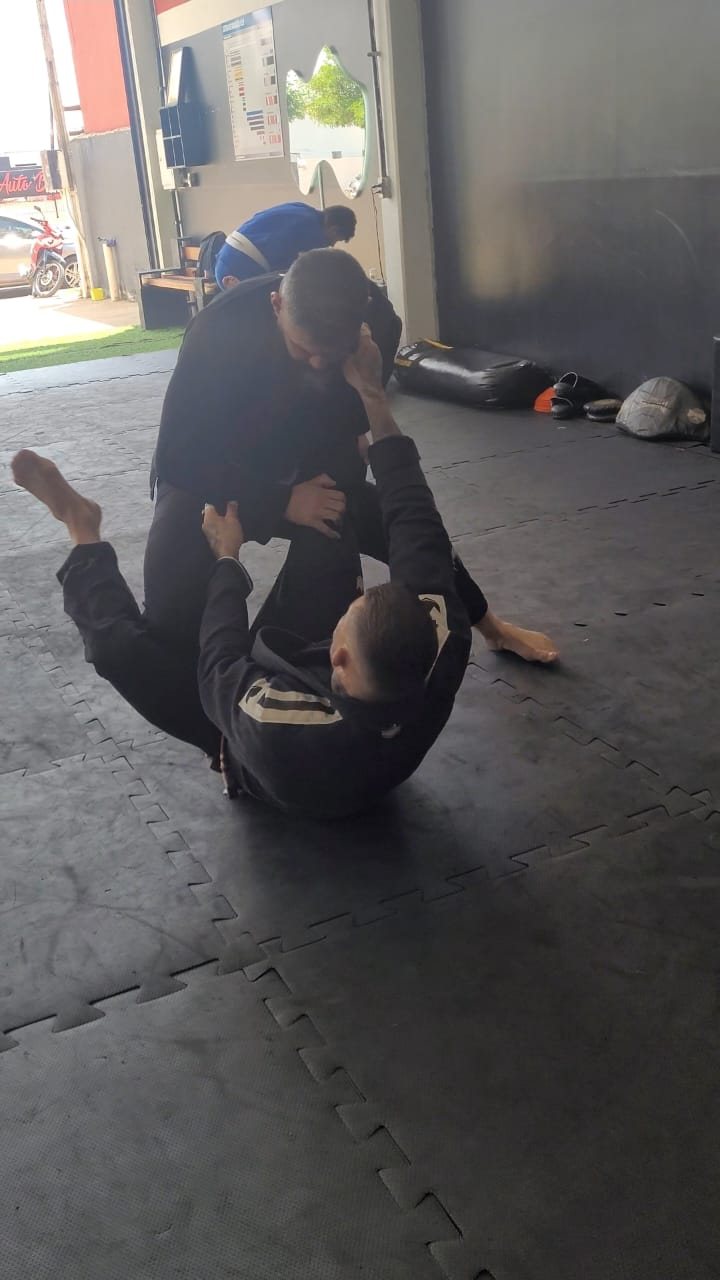
There is a moment, in every fight, when someone is on top of you. Not a figure of speech. Eighty, ninety kilos resting on your chest, a forearm looking for your neck, the air coming in by halves. The clock does not stop. The body screams to do something — anything, now. And the first lesson of jiu-jitsu, the one that takes years to sink in, is exactly this: do not do just anything. Breathe. Protect what needs protecting. Wait.
I came to the mat looking for a sport. I found one — and a way to defend myself, and a competition calendar that pulled me out of the house on weekends I could have spent on the couch. None of that explains why I stay. What holds me is that jiu-jitsu became a way of living: a practice that rearranged, from the inside, how I pay attention, how I hold up under pressure and how I decide.
Under the weight
The bad position is the basic curriculum. Nobody learns to escape the mount without spending hours being mounted. And what you learn there is not a technique; it is a relationship with discomfort. You discover that it is possible to be at a disadvantage, feeling the weight, without panicking. That panic is what spends the energy you will need thirty seconds from now. That there is a gap — short, but real — between what the body asks for and what the situation requires, and that your whole life fits inside that gap.
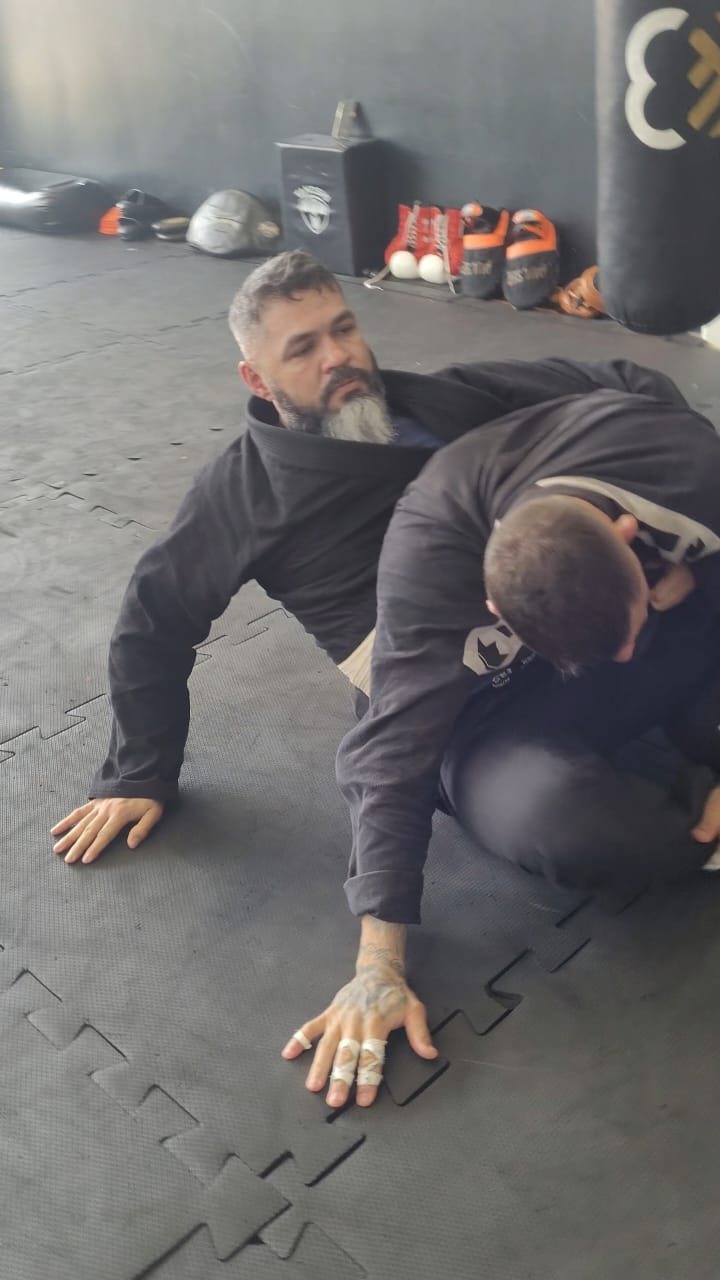
So you wait. Not the waiting of someone who has given up, but of someone who is reading. The other person’s weight shifts a centimetre. Their hip rises to reach for an arm. Now. A bridge, a turn, and the world flips: whoever was underneath is on top. The advantage was not taken by force — it was handed over by someone who hurried, to someone who knew how to wait.
What the mat carries into work
I have worked in technology for more than twenty years, and the work has never demanded as much attention as it does now. AI multiplied what fits into an hour and, with it, the number of things competing for every minute. Concentration became a scarce skill. And it is exactly the skill the mat trains, without negotiation: during a session there is no notification, no second tab, no “later”. There is what is happening on your chest, now. The attention you learn to hold there becomes available for a hard specification, a study session, an architecture decision that has to be made without full certainty.
The same goes for pressure. A production incident at two in the morning has the same shape as a mount: weight, urgency, the body asking for any action. And the right answer is the same. Breathe. Protect what needs protecting. Read the situation before you move. The calm I have today in hard meetings, in tight deliveries, in conversations nobody wants to have, did not come from a management book. It came from being crushed, regularly, by people better than me — and from discovering that you can think there.
Patience, resilience, and wanting to come back
Jiu-jitsu does not get easier. It gets different. Whoever improves changes partners, moves up a belt, and goes back to being crushed by a new kind of weight. It is a project with no finish line, and that is why it teaches real resilience — not the kind that holds out until it is over, but the kind that carries on when it will not be over. You learn patience with your own progress, which is slow and not linear, and with the others, who are on the same road.
And you learn, perhaps above all, to tell discomfort from danger. Most of what stops us — at work, in study, in life — is discomfort passing itself off as danger. The mat recalibrates that sensor every week.
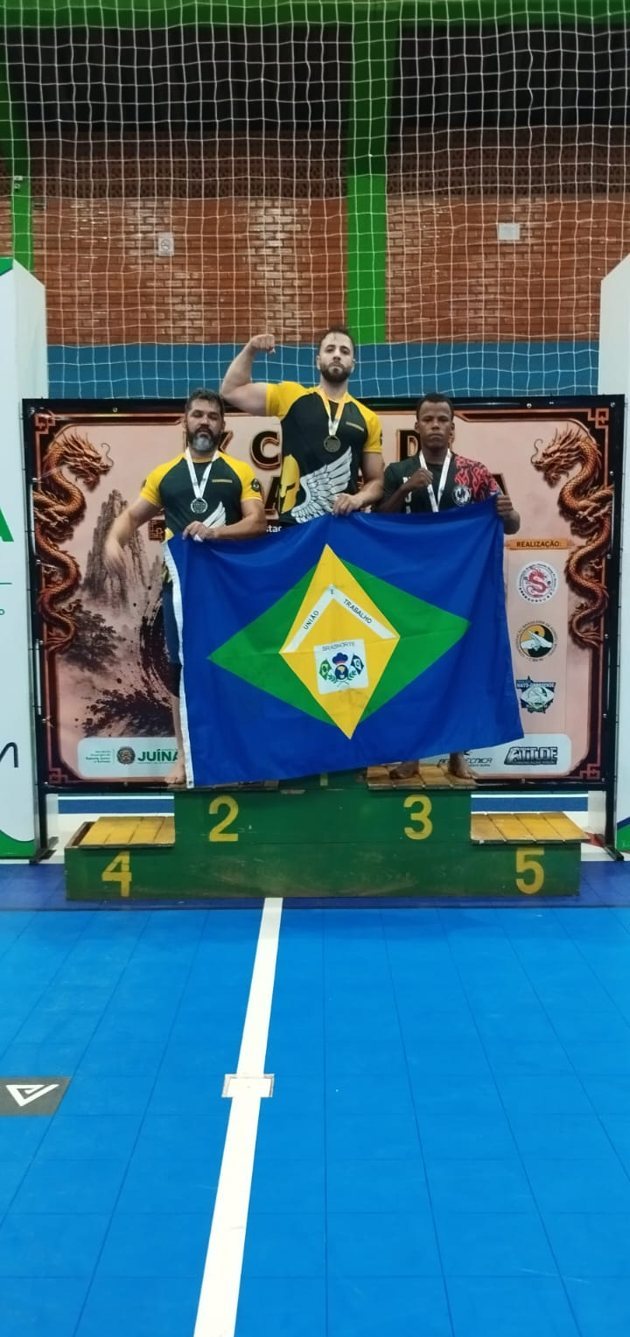
That is why I come back. Not for the medals, though they exist, nor for the self-defence, though it is there. I come back because, at some point in the session, someone will be on top of me, and I will breathe, and I will wait, and the world will flip. And tomorrow, in front of a problem that looks bigger than me, I will remember that I have been there before.